Morse Code Tools
How to Use Morse Code With Light?
A practical visual method for sending dots, dashes, letters, and words with a lamp.
By Vigneshwaran Vijayakumar, Developer and Publisher | | Reviewed under the ClockTools editorial policy
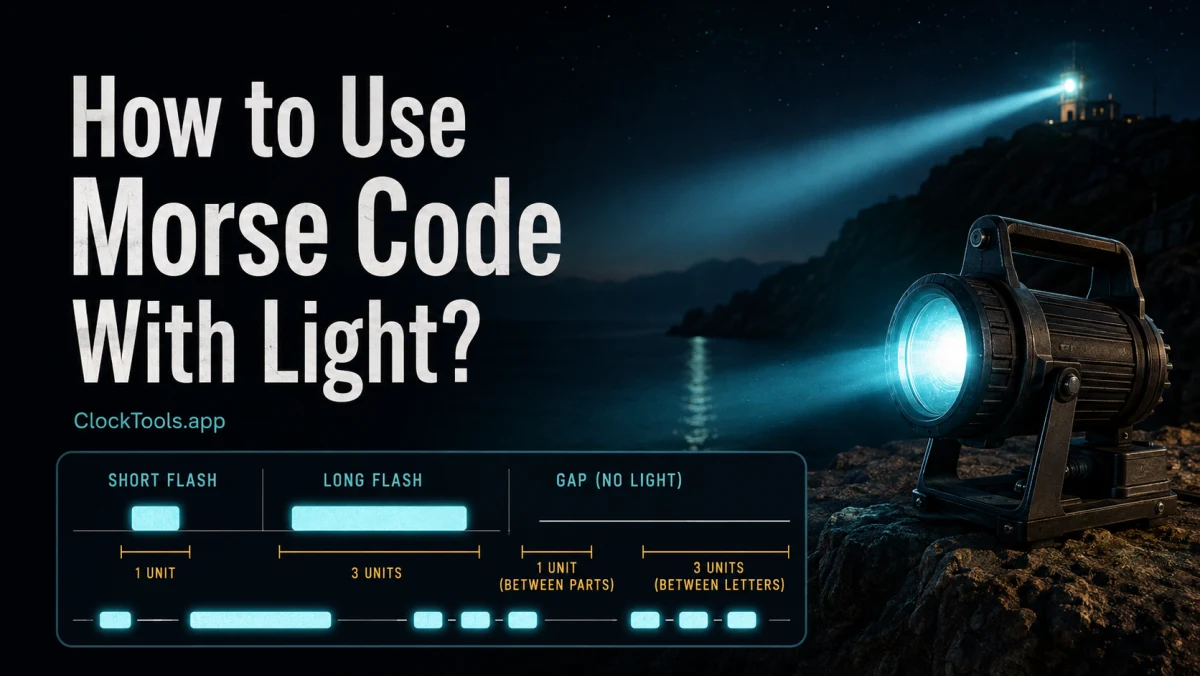
Table of contents
To use Morse code with light, choose one steady timing unit, flash a dot for 1 unit and a dash for 3 units, then leave darkness for 1 unit inside a letter, 3 units between letters, and 7 units between words. Start slowly enough that every on/off boundary is obvious. The ClockTools Morse Code Light can convert text and play the flash pattern while you practise.
Build a readable light signal
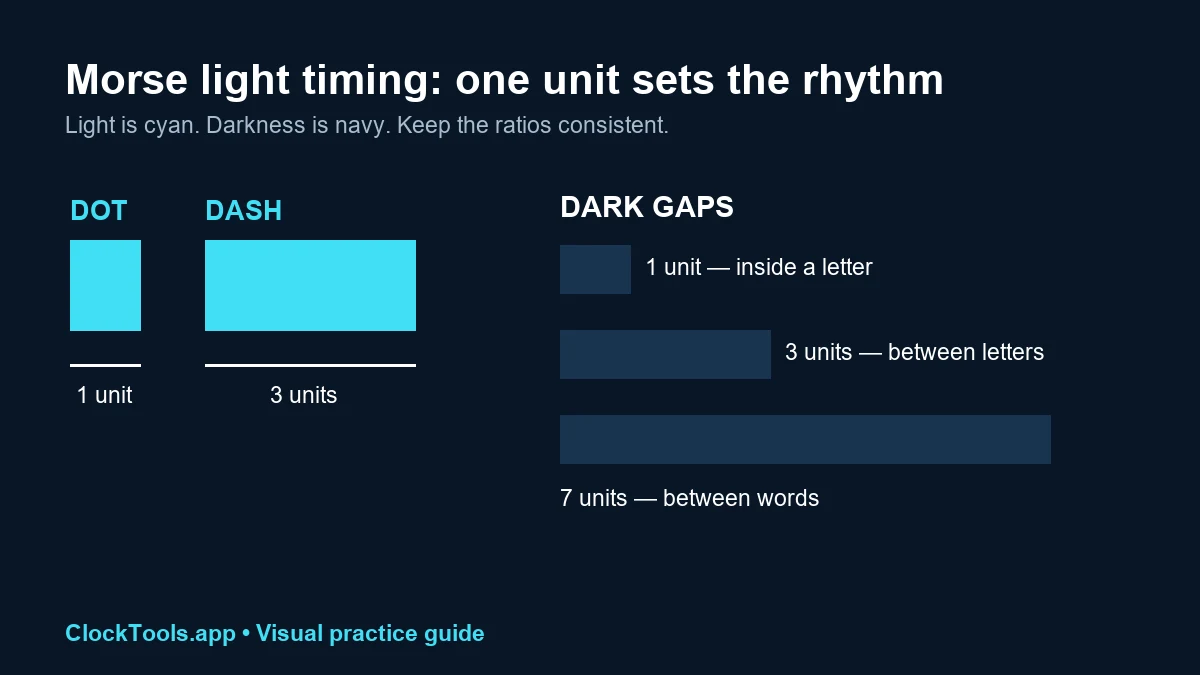
Morse is a timing system, not merely a list of dots and dashes. Pick a unit that you can repeat comfortably. If 1 unit is about a quarter second, a dot is one quarter second and a dash is three quarters. The precise speed matters less than the ratio and the clean change between light and darkness.
| Part | Light or dark | Duration |
|---|---|---|
| Dot | Light on | 1 unit |
| Dash | Light on | 3 units |
| Gap inside one letter | Light off | 1 unit |
| Gap between letters | Light off | 3 units |
| Gap between words | Light off | 7 units |
Aim the lamp at a safe, visible surface rather than directly into someone’s eyes. Confirm the receiver can see the full on/off cycle. The formal character patterns come from the ITU International Morse code recommendation; the interactive tool turns those patterns into a repeatable practice sequence.
Send SOS step by step
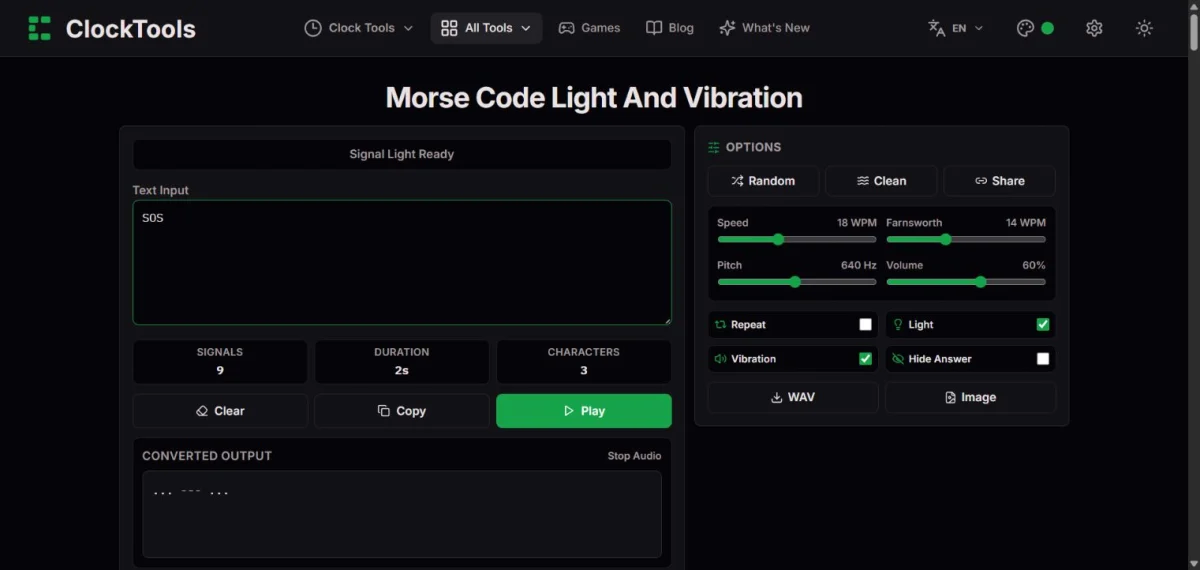
Type SOS in the tool and check that the conversion reads ... --- .... Send three short flashes, pause for the letter gap, send three long flashes, pause again, then send three short flashes. In the current ClockTools test, that sequence contained 9 signals across 3 characters and the displayed estimate was about 2 seconds at the selected speed.
This exercises three separate letters, not the continuous SOS distress prosign. For the distress signal, send ...---... as one uninterrupted group with one-unit dark gaps between flashes and no letter-length pauses.
Practise the whole pattern before relying on it. SOS is an internationally recognized distress signal, but a web tool or flashlight is not a substitute for contacting local emergency services when a working phone, radio, alarm, or other safer channel is available.
Keep the gaps distinct
Most beginner errors happen in the dark intervals. If the gap between letters is too short, two characters merge. If the gap between words is too short, a receiver must guess where the phrase breaks. Counting the unit silently helps: one beat inside a character, three beats after a letter, seven after a word.
Compare the visual rhythm with what Morse code sounds like if you learn better by pairing light and sound. The sound article explains auditory recognition; this guide stays focused on visual timing and lamp control.
Diagnose a hard-to-read flash
First, slow down. Next, record a practice run and inspect whether every dash is about three times a dot. Then check the dark gaps separately. A steady hand, a fixed lamp position, and a plain background usually help more than extra brightness. Use Morse Code Practice to reinforce character recognition before returning to the light sequence.
Do not point powerful lights toward drivers, aircraft, vessels, or people who have not agreed to the exercise. The goal is a controlled, consent-based practice signal.
Frequently Asked Questions
How long should a Morse code light flash last?
Use one timing unit for a dot and three units for a dash. Keep the unit consistent instead of chasing an exact number of seconds.
How do you separate Morse code letters with light?
Leave three timing units between letters and seven between words; the gap between parts of one letter is one unit.
What is SOS in Morse code with light?
The distress signal is three short flashes, three long flashes, then three short flashes, sent as one continuous group (...---...) with short gaps between flashes and no letter gaps. The spaced SOS example above is for text practice.
Can a phone flashlight send Morse code?
Yes for practice and short-range signaling, provided the flashes and dark gaps are visible and evenly timed.

About The Author
Vigneshwaran Vijayakumar
Founder, Developer and Publisher of ClockTools | Digital Marketing Manager | India
Vigneshwaran is an engineer with decades of technical experience, including professional work as a Digital Marketing Manager in Dubai. His work connects data analysis, search engine optimization, conversion-rate optimization, content systems, visual production, and applied AI and machine learning. At ClockTools, he turns that multidisciplinary experience into focused browser utilities and practical, source-aware guides.